History – Exploring Ancient Egypt
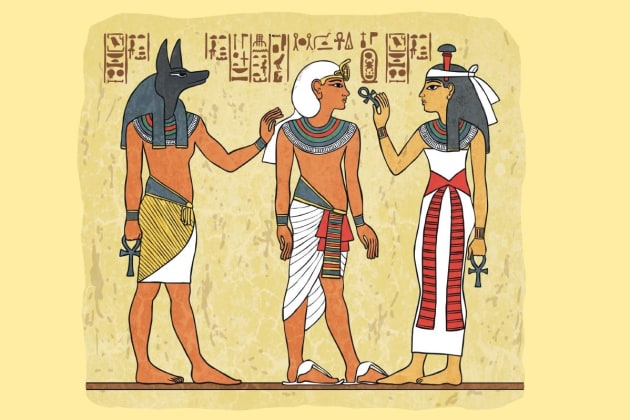
In this topic we will learning all about Ancient Egypt. Pupils will learn about the key turning points in Ancient Egyptian history and discover how this remarkable civilisation developed over 3,000 years. They will investigate the importance of the River Nile and understand how it supported farming, trade and daily life.
Children will explore the hierarchy of Egyptian society, learning about the roles of pharaohs, priests, scribes, soldiers and workers. They will also study the pyramids and mummification, discovering what these tell us about Egyptian beliefs in the afterlife. As part of their learning, pupils will investigate hieroglyphics and find out how the Ancient Egyptians developed one of the world’s earliest writing systems.
Throughout the topic, children will examine artefacts, historical sources and evidence to help them build a picture of life in Ancient Egypt. They will also learn about some of the civilisation’s greatest achievements and consider how these continue to influence the modern world today. By the end of the unit, pupils will have developed a deeper understanding of one of history’s most influential ancient civilisations.
Science – Electricity
During this topic we will be exploring the exciting world of electricity. Pupils will learn about the many ways electricity is used in everyday life and identify common appliances that rely on electrical energy. They will discover the importance of using electricity safely and understand the difference between mains-powered and battery-powered devices.
Throughout the unit, children will investigate how electrical circuits work by building and drawing simple series circuits using cells, wires, bulbs, buzzers and switches. They will learn how electricity flows through a complete circuit and explore why some circuits work while others do not. Using their scientific enquiry skills, pupils will predict, test and explain what happens when parts of a circuit are changed.
The children will also investigate different materials to find out which are conductors and insulators. They will discover that metals are excellent conductors of electricity and will carry out practical tests to identify materials that allow electricity to flow. By the end of the topic, pupils will be able to explain key scientific ideas, record their findings using diagrams and tables, and apply their understanding to solve simple electrical problems. This hands-on topic will help pupils develop both their scientific knowledge and investigative skills.
DT – Electrical Systems
During this topic, Year 4 will become designers, engineers and inventors as they explore electrical systems through the design and creation of their own working torch. Pupils will begin by learning how everyday electrical items work and investigating the key components found inside a torch, including batteries, bulbs, switches and wires.
Children will research and evaluate a range of torches, considering how their design meets the needs of different users. They will compare features, identify strengths and weaknesses, and use their findings to create their own design criteria. Using their knowledge of circuits, pupils will then design a torch that includes all the essential electrical components and carefully plan how these will fit together.
Throughout the project, children will develop practical making skills as they construct a torch casing, build a working circuit and assemble their final product. They will test and refine their designs, solving problems and making improvements along the way. Finally, pupils will evaluate their finished torches, reflecting on how well they meet their design criteria and the needs of their intended user.