History
Our history curriculum enables pupils to develop a coherent understanding of the past and how it has shaped the world in which they live. We intend for pupils to acquire secure chronological knowledge, understand significant people and events, and recognise change, continuity, cause, consequence and historical significance. Through carefully sequenced learning, pupils build connections between periods and develop an increasingly sophisticated understanding of the past.
Pupils learn that history is constructed through the interpretation of evidence. They investigate historical sources, consider reliability and perspective, compare accounts and develop an understanding that people in different periods experienced and interpreted the world differently. They learn to distinguish evidence from opinion and to support historical explanations with relevant knowledge.
Oracy supports pupils to think and communicate as historians. Through structured debate, questioning, discussion and explanation, pupils develop the vocabulary needed to describe chronology, explain causation, compare periods and justify interpretations using evidence. They learn to listen to alternative viewpoints and refine their own conclusions.
Our curriculum provides opportunities to explore a range of people, communities and experiences, broadening pupils’ historical understanding beyond familiar narratives. We remove barriers through explicit vocabulary teaching, carefully selected sources, visual support and appropriately scaffolded enquiry, while maintaining ambitious expectations for all. We want pupils to become thoughtful, knowledgeable historians who understand how the past informs the present and can engage critically with historical claims.
History is taught during Advent 2, Lent 2 and Pentecost 2. Each unit has a topic title and a big question that links to each lesson.
| Advent 2 | Lent 2 | Pentecost 2 | |
| EYFS | Remembrance Day Old and New
|
Farms in the past | Charles Darwin |
| Y1 | Childhood
How and why do things change over time? |
Florence Nightingale
Why is Florence Nightingale remembered today? |
Victorian School Days
What was life like in a Victorian school? |
| Y2 | The Great Explorers
What are the similarities and differences between Neil Armstrong and Christopher Columbus? |
Great Fire of London
Why was the Great Fire of London such an important event? |
Great British Monarchs
How have Queens ruled Britian? |
| Y3 | Through the Ages
How did Britain change from the Stone Age to the Iron Age? |
The Roman Empire
Why did the Romans invade Britain and what impact did they have? |
The Tudors
How did the Tudors change England? |
| Y4 | Invasion
What happened in Britain after the Romans withdrew? |
Pilgrim Fathers
Why are the Pilgrim Fathers important to Boston’s history? |
Ancient Egypt
Why is Ancient Egypt one of the world’s most important civilisations? |
| Y5 | Shang Dynasty
How did the Shang Dynasty shape ancient China?
|
The Perilous Plague
How did the Black Death change people’s lives? |
Ground breaking Greeks
Why is Ancient Greece still important today? |
| Y6 | Britain at War
What was the impact of WWII on Britain and its citizens? |
The Industrial Revolution
How did the Industrial Revolution change lives in Britain? |
Maafa
How did the slave trade change Britain and the lives of African people? |
Enrichment Opportunities
The children have opportunities inside and out of school to extend their learning beyond the core curriculum to enhance their academic, creative and personal development. Some of these include taking part in WOW days, art projects, workshops linked to topic and visiting historical buildings such as Lincoln Castle, St Botolph’s Church, Guildhall Museum and Flag Fen.
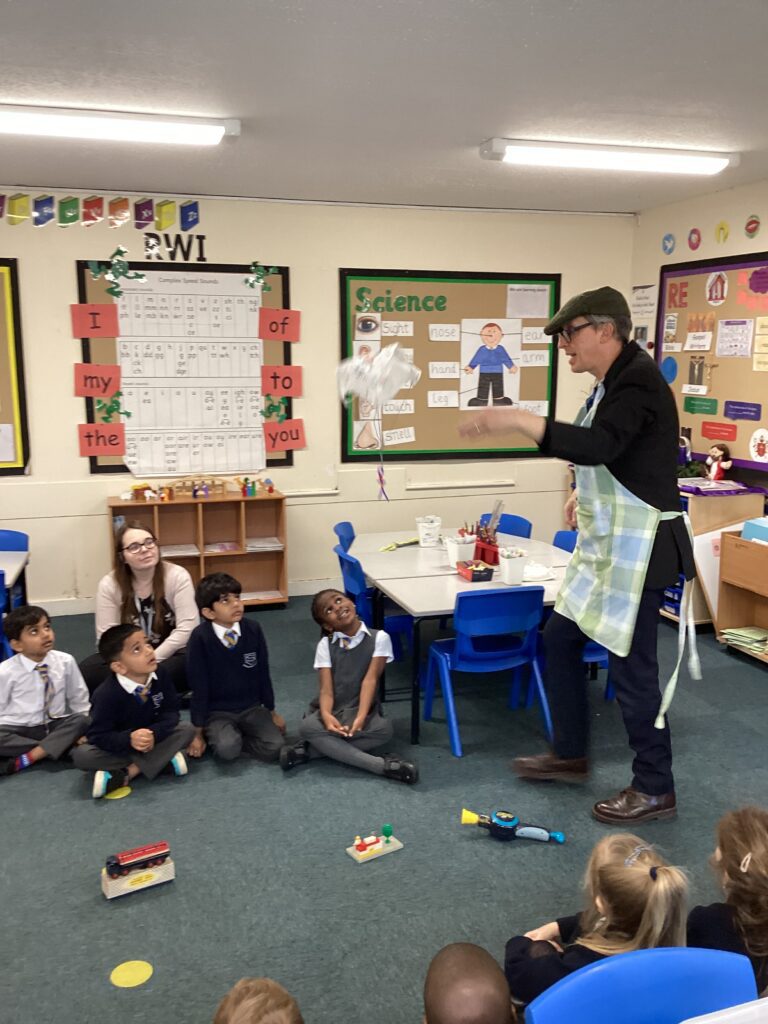 Year 1 taking part in a workshop for their Childhood topic.
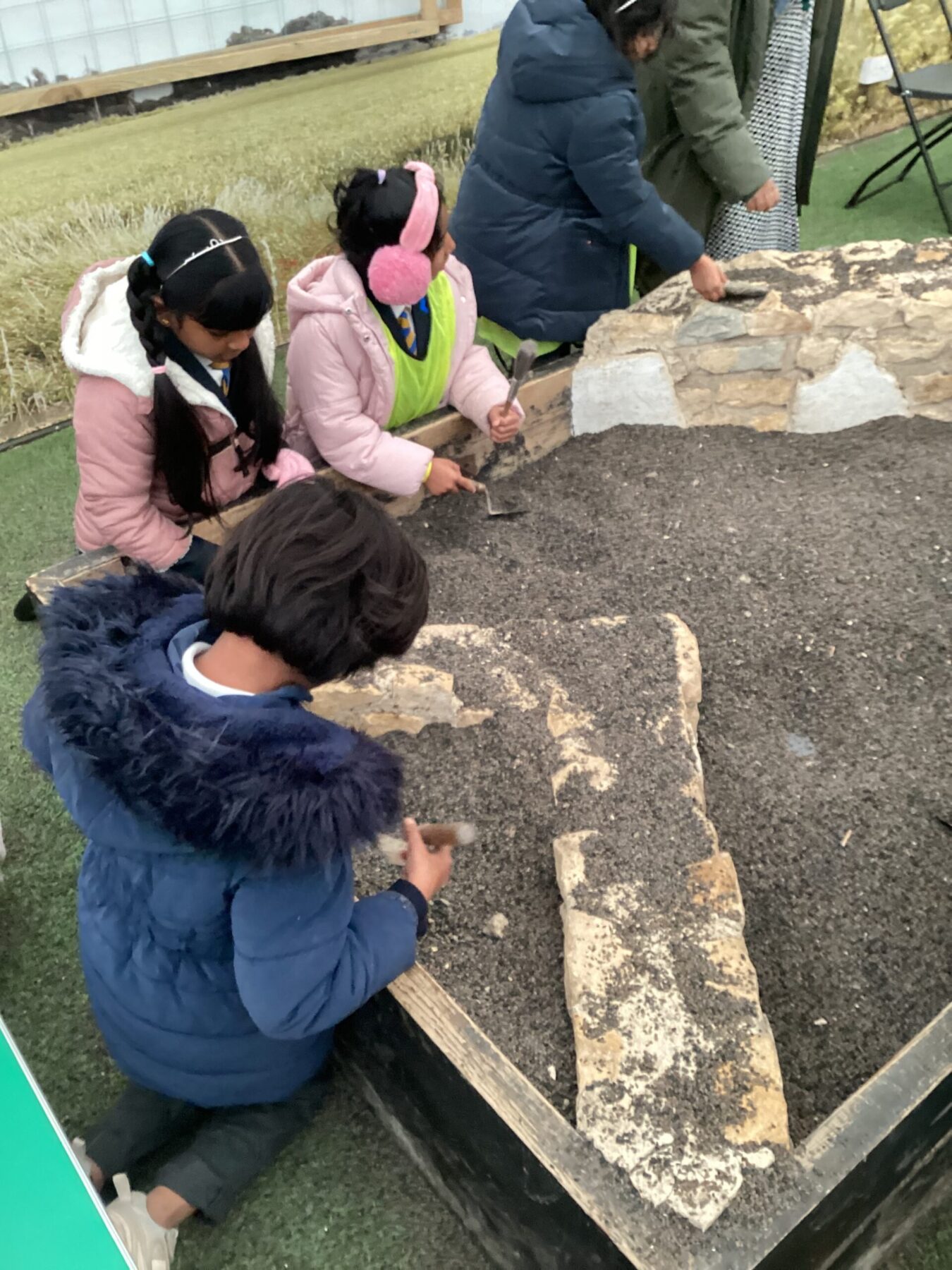 Year 3 exploring Flag Fen as part of their Through the Ages topic.
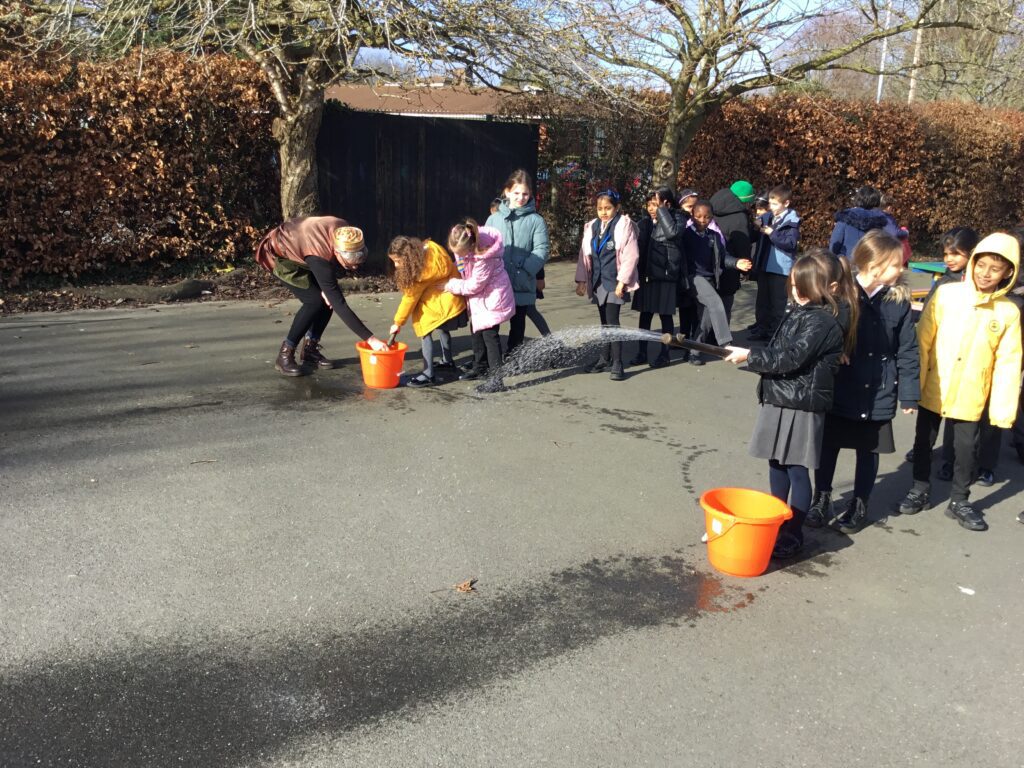 Year 2 taking part in their Great Fire of London workshop activity